

Why Presence Changes the Brain: It is the antidote to people's pain
One of the things I have fallen most in love with as a therapist is discovering that healing isn't found in having the right intervention, asking the perfect question, or offering insight. It's found in something much simpler, and much more profound.
It is found in being with another person.


Being with another person enhances right brain connection
Whether I'm sitting on the floor with a six-year-old in a playroom, meeting with a couple struggling to keep their relationship together, or sitting across from an individual trying to navigate their situation, I continue to witness the same beautiful phenomenon: people heal when they experience another human being who is fully present, deeply attuned, genuinely empathic, and completely nonjudgmental.
Modern relational neuroscience helps explain why this way of being with another person is so profoundly healing.
Our brains are fundamentally relational. We are not wired simply to learn from information or change because someone gives us good advice. We are wired to grow within safe, attuned relationships. Before our brains can reason, problem-solve, integrate new experiences, or make lasting changes, our nervous systems are continually scanning the environment, asking questions that often operate far beneath conscious awareness: Am I safe? Am I accepted? Does this person delight in me? Can I trust them with my inner world? Will I be judged if I reveal what's really happening inside me?
When the answer to those questions is yes, something remarkable begins to happen.
Nerves calm and regulate

The nervous system begins to settle. The body shifts out of protection and into connection. Heart rate slows, breathing deepens, muscle tension decreases, and the brain no longer needs to devote so many resources to scanning for danger. Defensiveness softens. Curiosity replaces self-protection. Instead of trying to survive the interaction, the person becomes free to explore it. It is from this place of emotional safety that people begin making connections, discovering insights, and finding solutions that no amount of advice, persuasion, or instruction could have produced.
This is one of the greatest gifts of therapeutic presence. When a child, teenager, or adult genuinely feels seen, felt, heard, understood, and accepted, something shifts not only psychologically but biologically. They experience what many attachment researchers describe as a regulated nervous system. Rather than feeling alone with overwhelming emotions, they experience another person helping them carry those emotions. In relational neuroscience, this process is often referred to as co-regulation—the capacity of one calm, attuned nervous system to help organize another.
The expert science behind relational connection
This understanding is beautifully reflected in the work of Dr. Dan Siegel and Dr. Tina Payne Bryson. In The Whole-Brain Child, they describe the importance of integrating the emotional, right hemisphere of the brain with the logical, language-based left hemisphere. Before we ask someone to reason, explain, or solve a problem, we first need to connect with their emotional experience.
Connection begins by slowing down enough to truly be with another person. It means giving our full attention, noticing what is happening beneath the behavior, naming what we observe without judgment, and communicating—both verbally and nonverbally—that their inner experience makes sense. It sounds like, "That was really disappointing." "You worked so hard on that." "I can see how frustrated you feel." These simple reflections are not techniques designed to manipulate behavior; they are invitations into relationship.

When people feel understood rather than evaluated, something remarkable happens: they no longer have to spend energy defending themselves. The higher regions of the brain responsible for reflection, empathy, flexibility, creativity, and problem-solving naturally become more accessible. Insight begins to emerge from within rather than being imposed from the outside.
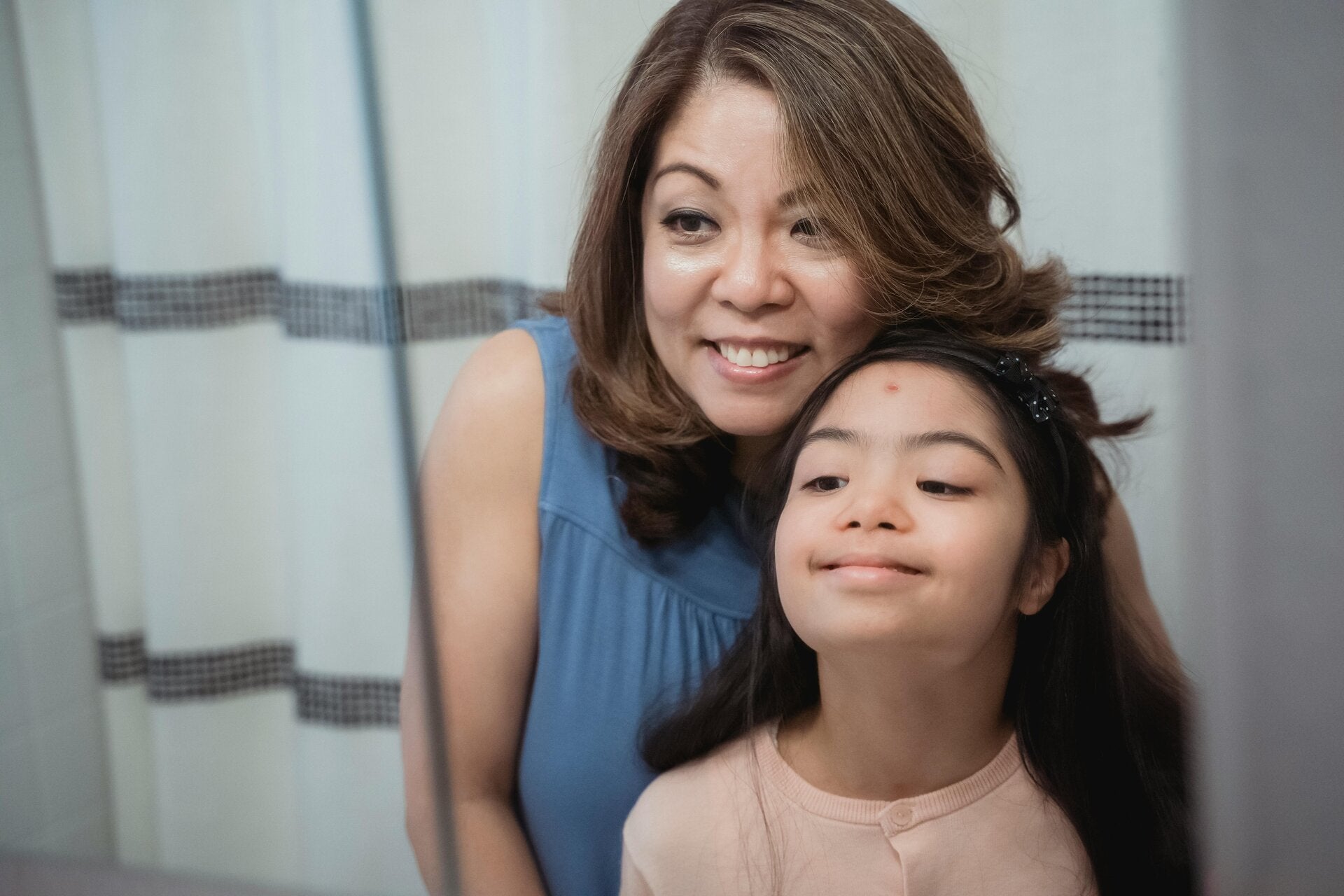
Attachment science has fundamentally reshaped how we understand children in particular. Children are not incomplete adults waiting to become people someday—they are already whole people with their own thoughts, emotions, preferences, fears, and ways of making meaning. They deserve the same respect, curiosity, and emotional dignity that we hope to offer any adult. When we approach children with unconditional positive regard, genuine empathy, and deep respect for their internal world, we communicate one of the most powerful messages a human being can ever receive:
"Who you are matters. Your feelings make sense. You are worthy of being understood."
Attachment science and relational neuroscience is proof in the pudding


Ironically, it is often from this place of complete acceptance—not criticism or correction—that the greatest growth begins.
Relational neuroscience tells us why this works. Human brains develop and reorganize within relationships. When we experience consistent attunement, empathy, acceptance, and authenticity, our nervous systems become regulated enough for the higher regions of the brain—the parts responsible for reflection, insight, flexibility, empathy, and decision-making—to come online.
In other words, people don't simply learn new information.
They become new versions of themselves because they have experienced a new kind of relationship.
That is why I believe unconditional positive regard is so transformative. It is not passive acceptance, nor is it agreement with every choice a person makes. It is the unwavering conviction that every person possesses inherent worth and the capacity to grow. When people no longer feel they must defend themselves from judgment, they become remarkably honest with themselves. Accountability arises naturally because it is no longer driven by shame, but by self-awareness.
Whether the client is a child processing difficult experiences through play, a couple rebuilding trust, or an individual making sense of their life story, the process is remarkably similar. My role is not to push. It is not to persuade. It is not to direct.
My role is to be present.
To attune.
To empathize.
To remain deeply curious.
To hold hope until they can hold it for themselves.
Ironically, the less I feel the need to direct the process, the more profound the transformation often becomes. Given enough emotional safety, people begin making connections they had never seen before. They discover answers that genuinely belong to them. They don't leave therapy carrying my insights; they leave carrying their own.
To me, that is the quiet miracle of therapy.
Healing is not something we do to people.
It is something we make possible by the way we choose to be with them.
And perhaps that's true not only in the therapy room, but in every relationship that has the power to change a life.
I'm Tyra Butler, a Licensed Marriage and Family Therapist with a private practice in Corona, California, serving children, couples, and families. For more than 16 years, I've had the privilege of walking alongside people as they navigate some of life's most challenging seasons.
I truly love what I do. I believe healing begins in the context of a safe, authentic relationship where people feel genuinely seen, heard, understood, and accepted. Whether I'm sitting on the floor in a playroom with a child, helping a couple reconnect, or supporting an individual through anxiety, grief, trauma, or life transitions, my goal is the same: to create a space where lasting growth can naturally unfold.
My approach is grounded in compassion, relational neuroscience, attachment theory, and evidence-based practices such as Child-Centered Play Therapy (CCPT). Rather than focusing on fixing people, I believe each person already possesses an innate capacity for healing and resilience. My role is to provide the empathy, safety, and support that allow those strengths to emerge.
It is an honor to come alongside my clients as they work through the hard things, discover new insights, strengthen their relationships, and move toward lives filled with greater peace, connection, and hope.